
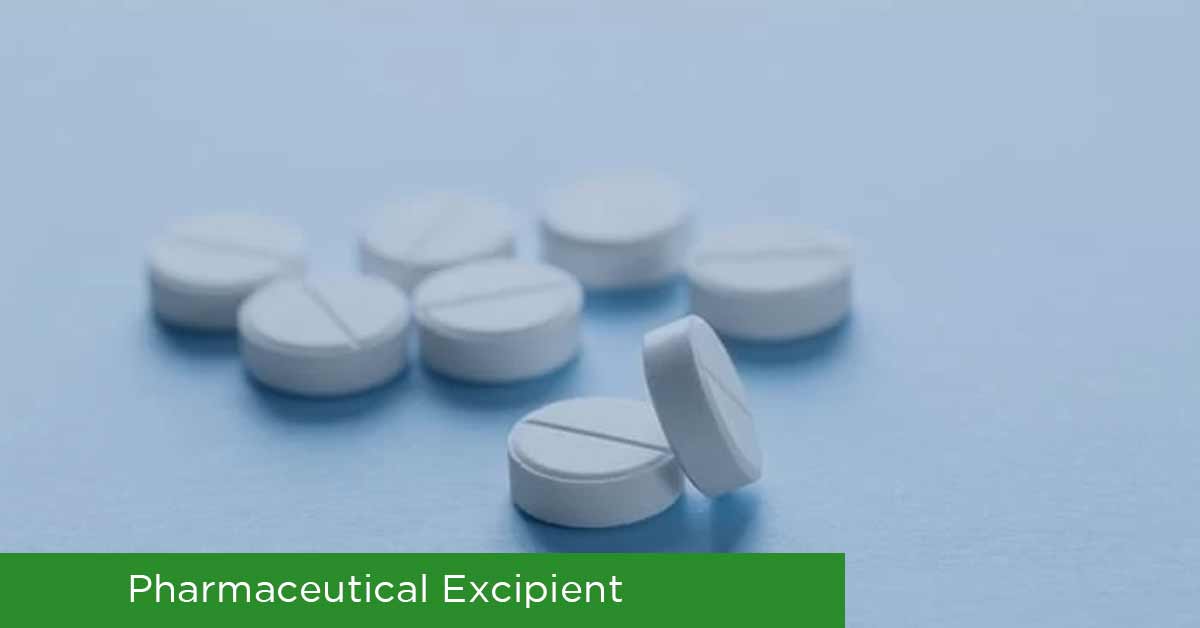
Pharmaceutical excipients are components that make up the dosage forms, together with the active pharmaceutical components to protect, sustain or improve the stability of the formulation. Active pharmaceutical ingredient (API) rarely maintain stability on its own, as it can denaturate, or stick to the container, making it unfit for use.
Pharmaceutical excipients can make up about 50 to 90% of the total mass/volume of pharmaceutical products and are typically present in higher concentrations than the API dosage forms.
The word, excipient comes from Latin excipere, meaning ‘to except’, which is simply explained as ‘other than‘.
“Pharmaceutical excipients are substances other than the active pharmaceutical ingredient (API) that have been appropriately evaluated for safety and are intentionally included in a drug delivery system.”
Pharmaceutical excipients could be inert and simple or active and complex. In the traditional sense, excipients are mostly structurally simple, biologically inert, and of natural origin (e.g. sugar, wheat, corn, and minerals). But with the development of novel drug formulation delivery systems, novel and complex excipients that are not inert are now developed.
Also, many pharmaceutical excipients (even the commonly used excipients such as cyclodextrins, dextran, and polyethylene glycol) can have toxic effect on animal cells at higher doses, though they are safe at therapeutic doses in humans.
Apart from the traditional excipients (cellulose, sugar, mineral salts), “functional excipients” that may carry the API (like certain lipids or cyclodextrins for improved delivery), or respond to triggers (pH, temperature) for controlled release, are emerging.
The production of excipients must follow strict GMP and must be of pharmaceutical grade. It must comply with current pharmacopeia like United States Pharmacopeia, European Pharmacopeia, and Japanese Pharmacopeia.
Roles of Pharmaceutical Excipients
- The main aims of adding pharmaceutical excipients are to increase the bulk of the formulation, imparting desired properties, and protecting the stability
- It also supports the bioavailability or patient acceptability (For a drug like Aspirin, that is not easily absorbed by the body, the excipient may serve as a solvent.
- Excipients are also used to control the release of medications in situations where early release could damage tender tissue and create gastric irritation or stomach upset.
- It will also assist in product identification, and improve the effectiveness and delivery of the drug in use.
- Pharmaceutical excipients maintain the integrity of the medication during storage.
Ideal Properties of Excipients
- It must be physical and chemical inert (however, there are recent reports of adverse reactions)
- It should not be poisonous
- It should not interfere with the bio-availability of the drug
- It must work with the medication and other substances
- It must have acceptable organoleptic properties
- Pharmaceutical excipients must be stable and reproducible
- It should not interact with drugs
- It must work with the basic packing material.
- It should be cost-effective.
Classification of Pharmaceutical Excipients
Pharmaceutical excipients are classified based on:
- Route of administration,
- Place of origin,
- Dose type, and
- Functions.
Route of Administration
Oral Excipients, Parenteral Excipients, and Topical Excipients
Origin
Lactose, gelatin, stearic acid, beeswax, honey, musk, lanolin are all animal-derived products, while starch, peppermint, turmeric, guar gum, arginates, acacia, and peppermint oil are of vegetable origin. Mineral compounds include Calcium phosphate, Silica, Talc, Calamine, Asbestos, Kaolin, Paraffin.
Inorganic Chemicals: Calcium Phosphates, Calcium Carbonate, Metallic Oxides, Calcium Sulfate, and Halites)
Organic Chemicals: The compounds of organic origin include Carbohydrates (Sugars, Starch, and Cellulose), Petrochemicals (Glycols, Povidones, Acrylic Polymers, Mineral Hydrocarbons), Oleochemicals (Glycerins, Fatty Alcohol, Mineral Stearates), and Proteins.
- Carbohydrates: Sugars, Sugar Alcohol, Artificial Sweeteners
- Starches: (Modified Starch, Dried Starch, and Converted Starch)
- Cellulose (Cellulose Ethers, Microcrystalline Cellulose, Cellulose Esters, CMC and Croscarmellose Sodium)
- Petrochemicals (Glycols like Polyethylene Glycol and Propylene Glycol)
- Mineral Hydrocarbons (Petrolatum, Mineral Waxes, Mineral Oils)
- Oleochemicals (Fatty Alcohols, Mineral Stearates, Glycerin, Lipids)
- Acrylic Polymers
- Povidones
- Proteins
Functionality:
Pharmaceutical excipients are classified as Binders, Fillers & Diluents, Flavoring Agents, Disintegrants, Colorants, Coatings, Suspension & Viscosity Agents, Lubricants & Glidants, Humectants, Solvent & Co – Solvent, Antioxidants, Preservatives, Sweeteners, Surface Active Agents, Buffering Agents, Chelating Agents, Excipients for Direct Compression.
Binder:
Binders are pharmaceutical excipients used to keep the constituents of tablets together, add volume, and ensure the tablet and granules have the necessary mechanical strength.
Examples include:
- Cellulose Derivatives: Microcrystalline Cellulose (MCC), Hydroxypropyl Cellulose (HPC), HPMC
- Starches: Corn starch, potato starch, and pregelatinized starch
- Polymers: Povidone, Polyethylene Glycol (PEG)
- Sugars: Gelatin, acacia, sucrose, sorbitol
Disintegrant:
These are compounds or chemical used to break down tablets and capsule contents into tiny pieces to ensure dissolution when they come in contact with the water in the gastrointestinal tract (GIT). A good disintegrant should have good hydration capacity, weak solubility, and poor gel forming capacity.
Examples include:
- Cellulose-based: carboxymethyl cellulose, Microcrystalline cellulose (MCC), low-substituted hydroxypropyl cellulose (L-HPC).
- Superdisintegrants: Croscarmellose sodium (Ac-Di-Sol), Sodium Starch Glycolate (SSG, Primojel, Explotab), and Crospovidone (Polyplasdone)
- Starch-based: Corn starch, pregelatinized starch.
- Natural: Plantago ovata (Ispaghula) husk, Fenugreek seed mucilage, and algal gums.
Fillers (Diluent):
Fillers help to enlarge the volume and bulk of pharmacological components in tablets and capsule to make it easier to meter and handle precisely during manufacturing.
A good filler should be non-hygroscopic, affordable, has nice flavour, and is compatible with other ingredients in the formulation.
Commonly used fillers include dibasic calcium phosphate, plant cellulose, vegetable fats and oils (for soft gelatine capsules). Others include lactose monohydrate, sucrose, mannose, calcium carbonate, and magnesium stearate.
Glidant:
Glidant are pharmaceutical excipients used in tablet and capsule manufacturing to improve flow of a granular mixture by minimising inter-particular friction. It lessen cohesion and friction between parts improving powder flow. Glidant are also used together with lubricants to reduce die wall friction.
Examples include talc, fumed silica, and magnesium carbonate.
Lubricant:
Lubricant prevent ingredients from adhering to the tablet punch or capsule filling machine and clumping together. It also reduces friction between the solids and die wall during tablet generation.
Examples include magnesium stearate, stearic acid, and polyethylene glycone.
Emulsifiers:
They are pharmaceutical excipients used to stabilize immiscible liquid mixtures (oil and water) by reducing interfacial tension, thereby ensuring homogeneity, and improving the bioavailability of drugs. Emulsifiers are used mostly in lotions, creams, ointments, and parenteral emulsions.
Emulsifiers may be Nonionic (Sorbitan esters/Spans, Polyoxyethylene sorbitan esters/Tweens), Anionic (Sodium lauryl sulfate), Cationic, or Natural (Lecithin, Acacia, Gelatin).
Thickening Agent:
They are pharmaceuticals excipients used to increase viscosity, improve stability, and control the rheology of liquid suspensions, syrups, and topical creams/ointments. Thickening agents ensure that the active ingredients are uniformly distributed in the formulation.
Examples include Cellulose Derivatives (Methyl cellulose (MC) and Sodium carboxymethyl cellulose (CMC)), Carbomers (Acrylic Acid Polymers), Natural Gums (Xanthan gum and Guar gum), and Mineral Thickeners (Magnesium aluminum silicates or silica).
Suspending Agents:
Suspending agents are pharmaceutical excipients added to liquid formulations to increase the viscosity and decrease the sedimentation rate of insoluble drug particles, ensuring uniform dosing and preventing hard caking.
Examples include Cellulosic Derivatives (Methylcellulose, carboxymethylcellulose (CMC), hydroxypropylmethylcellulose (HPMC)), Natural Gums/Polysaccharides (Xanthan gum, acacia, tragacanth), Synthetic Polymers (Carbomers (Carbopol) and colloidal silicon dioxide), and Inorganic Agents (Clays) like Bentonite, aluminum magnesium silicate (Veegum).
Coloring Agent:
Colorants add visual appeal to pharmaceutical dosage forms. They are regarded as cosmetics for pharmaceutical preparations.
Examples include natural colorants derived from plants, insects, or minerals (e.g., Chlorophyll, Caramel in brown, Amaranth carmine in red, Saffron in yellow, Beetroot Red, Turmeric).
Also, synthetic colorants (certified dyes/pigments) like Brilliant blue FCF (Blue 1), Titanium dioxide, FD&C Red No. 40 (Allura Red AC), Yellow No. 5, or tartrazine (E102), D&C Red 28 (Phloxine B), and D&C Violet 2.
Antiaderents or anti-sticking agent:
These agents prevent adhesion of the tablet surface to the die walls and punches, thereby stopping the picking or sticking of tablets.
Examples include talc (1–5%), magnesium stearate (<1%), cornstarch (2–10%), and colloidal silicon dioxide (0.1–1.0%). Magnesium stearate, are multi-functional, and act as both lubricant and antiadherent.
Preservatives:
Preservatives are utilized as pharmaceutical excipients to protect against degradation and microbial growth, to ensure safety and extend shelf life of pharmaceutical formulations.
Examples include antioxidants (e.g., EDTA), antimicrobials (e.g., Benzalkonium Chloride, Chlorobutanol), antifungals/yeast (Parabens (Methyl/Propyl), Sorbic Acid / Potassium Sorbate, and Benzyl Alcohol & Phenol.
Flavouring Agents:
They are used to used to mask unpleasant tastes and odors of drugs, to improve patient compliance and acceptability, especially for pediatric and geriatric populations.
Examples include cherry, strawberry, orange, banana, and raspberry (pediatric suspensions and syrups), peppermint, spearmint, and menthol (cough syrups, lozenges, and antacids), vanilla (chewable tablets, and vitamins), and cinnamon and ginger (for specific formulations)
Sweeteners:
They are pharmaceutical excipients used to mask bitter tastes, improve palatability, and enhance patient compliance, especially in pediatric and geriatric liquid or chewable preparations.
There are two forms: Nutritive (Bulk) Sweeteners (Sucrose, Sorbitol/Mannitol, and Fructose/Dextrose/Glucose), and Non-Nutritive (High-Intensity) Sweeteners (Aspartame, Sucralose, Sodium Saccharin, and Stevia/Rebaten). Non-Nutritive sweeteners offer sweetness without calories.
Coating Agents:
Coating will apply a coating material mostly a dry layer on the surface of dosage forms. Coating adds stability, mask taste and odor, improve appearance and ease of identification, and also modify the release of drug in the GIT.
Examples include Hydroxypropyl methylcellulose (HPMC), Polyvinyl alcohol (PVA), Cellulose Acetate Phthalate (CAP), and Methacrylic acid copolymers.
Sorbents (adsorbents and absorbents):
Sorbents manage moisture, enhance flow, and serve as carriers in solid dosages. They are used in pharmaceutical industry to stabilize drug, purify active ingredients, and treat acute poisoning.
Examples include activated charcoal, silica gel, and bentonite.
Buffering Agent:
They are weak acids or bases (e.g., citrates, phosphates, acetates) that helps to maintain a stable pH, ensure drug solubility, stability, and patient comfort. They keep parenteral preparations near the blood’s pH (7.4), and guarantee the efficacy of ophthalmic, topical, and oral formulations.
Plasticizers:
They are low molecular weight pharmaceutical excipients added to polymers used in tablet coatings, capsules, and drug-delivery films, to increase flexibility, reduce brittleness, and lower the glass transition temperature.
Common pharmaceutical platicizers such as Citrates (Tributyl citrate (TBC), Triethyl citrate (TEC)), Phthalates (Diethyl phthalate (DEP), Dibutyl phthalate (DBP)), and Glycerols (Triacetin, Tributyrin).
Surface Active Agent or Surfactants:
Surfactants are amphiphilic compounds that reduce surface/interfacial tension, and act as excipients for emulsification, solubilization, wetting, and drug delivery stabilization. They can also have antimicrobial activity.
Examples include Solubilizers (Tween 80, Cremophor RH40), Emulsifiers(e.g., Lecithin, Span 80, Sodium lauryl sulfate (SLS)), Wetting Agents (Sodium dodecyl sulfate, Benzalkonium chloride), and Antimicrobials (Cetrimide, Benzalkonium chloride).
Humectants:
Humectants are hygroscopic substances used to maintain moisture content, stability, and texture in creams, ointments, and lotions. They improve skin hydration, and penetration of the active ingredients.
Examples include Glycerin (Glycerol), Propylene Glycol, Polyethylene Glycol (PEG), and Sorbitol.
Solvent and Co-Solvent:
Solvents and cosolvents are liquid vehicles used to dissolve, suspend, or emulsify drugs, to enhance solubility and stability.
Water is the primary solvent, while cosolvents like ethanol, propylene glycol, PEG, are added to enhance the solubility of poorly water-soluble drugs by lowering the mixture’s polarity.
Antioxidants:
They are free radicals scavengers and stabilizing excipients used to prevent drug degradation through oxidation. Oxidation leads to discoloration, loss of activity, and odor.
Examples include water-soluble (Vitamin C), lipid-soluble (Vitamin E), and chelating agents.
Complexing Agent:
Complexing agents, also called chelating agents or sequestering agents, are functional pharmaceutical excipients that form reversible complexes with active pharmaceutical ingredients (APIs), and alter their solubility, stability, and bioavailability.
Examples include cyclodextrins, EDTA.
Excipient by Dosage Forms
They include excipients for use in:
- Solid Dosage Form
- Liquid Dosage Form, and
- Semi-solid Dosage Form.
Excipients used in Solid Dosage Form (Tablets and Capsules):
The drug and one or more excipients are in close contact in solid dosage form, these pharmaceutical excipients may have an impact on the medication’s stability. This will impact on the choice of selection of the excipient to use.
The common excipients include Diluents/ fillers like lactose or microcrystalline cellulose to add volume, Binders (PVP, HPMC) to hold the tablet together, Glidants (silicon dioxide, talc), Lubricant (magnesium stearate, stearic acid), Disintegrants (croscarmellose), Antiadherents, Flavoring agents, Coloring Agents, Sweeteners and Coating polymers (HPMC, ethylcellulose) for extended-release or enteric coatings. Shelling materials are also used in capsules.
Excipients for Use in Liquid Dosage Form:
Pharmaceutical excipients such as solvents (water, alcohol, glycerin) to dissolve or suspend the API, emulsifying, dispersing, stabilising, preservative (sodium benzoate, methylparaben), buffers or pH adjusters (citric acid, sodium citrate) for stability, Viscosity enhancers (e.g. carboxymethylcellulose), sweetening and flavouring agent (sucrose, artificial sweeteners, fruit flavors), and colouring agent, are used for liquid preparations.
Excipients Used in the Semi- solid Dosage Form (Creams, Ointments, Gels):
Antioxidants, bases and ointment media (e.g. petroleum jelly, dimethicone), humectants (glycerin, propylene glycol) to retain moisture, emulsifiers (cetostearyl alcohol, lecithin) to stabilize oil-water mixtures; thickeners/gelling agents (carbomers, cellulose derivatives), coloring agents, flavoring agents and and preservatives (phenoxyethanol, benzyl alcohol).
Natural Excipients in Novel Drug Delivery Systems:
There are recent research and interest in herbal excipients as synthetic excipients have difficulties with toxicity assessment and regulatory licencing. Herbal excipients are less toxic, biodegradable, biocompatible, readily available, and is cost-effective.
- Polysaccharides: pectins, alginates, starches, gum, gum acacia, xanthan gum, guar gum, amylase, tragacanth, and karaya gum.
- Volatile oils: cinnamon and clove.
References
- https://scispace.com/pdf/an-overview-on-pharmaceutical-excipients-their-roles-and-1ihrog34.pdf
- https://www.pharmajournal.net/article/43/2-2-11-269.pdf
- https://www.ipsf.org/article/pharmaceutical-solutions-and-excipients
- https://www.jinlupacking.com/blogs/what-is-a-pharmaceutical-excipient/
- https://www.pharmaexcipients.com/pharmaceutical-excipients-some-definition/
- https://www.pharmaexcipients.com/pharmaceutical-excipients-some-definition/